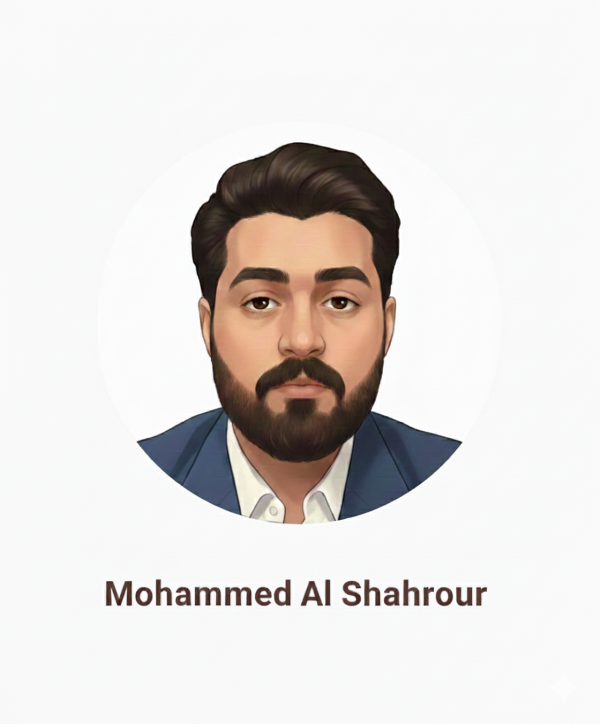
Mohammed Al Shahrour is an Artificial Intelligence Engineer driven by one core mission: using intelligent systems to solve real human problems. With a strong foundation in full-stack development, AI pipelines, cloud infrastructure, and robotics, Mohammed focuses on building technology that improves accessibility, autonomy, and quality of life.
His work sits at the intersection of AI, human–machine interaction, and assistive robotics, where innovation directly impacts people who need it most.
🤖 Technical Background & Expertise
Mohammed brings together software engineering and applied AI to build end-to-end intelligent systems.
Core skills include:
Programming: Python, SQL
Web & Backend: FastAPI, Flask, RESTful APIs
Frontend & Mobile: React.js, Flutter (Dart)
AI & LLM Pipelines: Voice recognition, AI-driven automation
Infrastructure: Docker, cloud-enabled backends
Robotics: Raspberry Pi–based control systems
This multidisciplinary skill set allows him to design systems that are not only intelligent, but also scalable, maintainable, and production-ready.
⚙️ Featured Project: VocaArm
Voice-Controlled Robotic Arm for Amputees
Many amputees—particularly those affected by war, accidents, or medical conditions—struggle with regaining independence in daily life. Existing prosthetic solutions are often:
Expensive
Difficult to control
Limited in functionality
Not accessible in low-resource environments
Traditional control mechanisms lack intuitive interaction, making everyday tasks frustrating or impossible.
💡 The Solution: VocaArm
VocaArm is a voice-controlled robotic arm designed to give amputees a more natural, accessible way to interact with their environment.
Users issue voice commands in Arabic or English through a mobile app, which are instantly translated into precise robotic arm movements. The result is a system that restores mobility, independence, and confidence.
At its core, VocaArm combines AI-driven voice recognition, affordable hardware, and a robust backend to create a powerful assistive technology.
🎯 How VocaArm Was Built
Raspberry Pi acts as the central controller
Ensures portability, affordability, and low power consumption
FastAPI backend manages:
Voice commands
Arm movement logs
System configurations
PostgreSQL database stores:
User profiles
Usage data
Performance logs
Python for robotic control logic
Flutter (Dart) for the mobile application
Bilingual interface supporting Arabic and English
Advanced voice recognition algorithms translate speech into movement
Focused on accuracy, responsiveness, and real-time execution
RESTful APIs connect:
Mobile app
FastAPI backend
Raspberry Pi hardware
Ensures fast, reliable, real-time command execution
Continuous testing to improve:
Voice recognition accuracy
Command latency
Mechanical reliability
🔧 The Biggest Challenge (and How It Was Solved)
Challenge:
Achieving low-latency, highly accurate translation of voice commands into smooth robotic arm movements.
Solution:
Optimized the voice recognition pipeline
Fine-tuned database interactions for faster command retrieval
Reduced system delays to deliver near real-time responsiveness
This balance between AI accuracy and system performance was critical to making VocaArm practical for everyday use.
💫 Who Benefits from VocaArm?
Amputees affected by war, accidents, or illness
Individuals seeking affordable assistive technology
Users in resource-limited regions where advanced prosthetics are inaccessible
By prioritizing affordability and usability, VocaArm expands access to life-changing technology.
😄 Future Vision for VocaArm
Planned Advancements
AI-driven predictive movement
Anticipating user commands based on context and prior actionsExpanded command sets
Complex gestures and multi-step actionsHaptic feedback & sensory integration
Touch and pressure feedback for safer object handling
Beyond Prosthetics
Industrial robotics
Teleoperation in hazardous environments
Rehabilitation and physical therapy robotics
Scalability
Cloud-connected control systems
Modular hardware upgrades
Multilingual support
Deployment in underserved regions
Ultimately, VocaArm aims to evolve into a versatile AI-powered robotic assistant, advancing human–machine interaction across healthcare, rehabilitation, and industry.

💼 Career Journey
| 🏢 Role | 💡 Experience | 🏆 Key Contributions |
|---|---|---|
Full Stack Developer & AI Engineer Mohammed Al Shahrour builds scalable web and mobile applications that combine strong backend performance, intuitive frontend design, and AI-driven systems. | Full Stack Developer — Al-Mohtarif Company Full Stack Developer — Freelance (Upwork) |
|
📖 Education
Bachelor’s Degree
Arab International University
Oct 2019 – Jul 2024
🦾 Projects
VocaArm – Voice-Controlled Robotic Arm for Amputees
Oct 2022 – Feb 2023
Built a bilingual (Arabic & English) voice-controlled robotic arm, increasing functional capability by 40%.
Integrated advanced voice recognition for precise, reliable movements.
Tech: Raspberry Pi, Python, ROS2, Flask, Flutter (Dart)
Fluencia – Speech Training App for Stroke Patients
Oct 2021 – Feb 2022
Developed a mobile app to improve speech fluency, achieving 25% higher user engagement and 20% fluency improvement.
Implemented voice analysis, chatbot interaction, and user-friendly exercises.
Tech: Python, Flask, Flutter
WealthCode – Company Website Development
Jul 2024 – Aug 2024
Designed and deployed a modern, responsive corporate website.
Tech: HTML, CSS, JavaScript, FastAPI, PostgreSQL, Python
📈 Professional Impact
Mohammed’s journey includes impactful projects and collaborations focused on accessibility, intelligent systems, and real-world problem solving:
Al-Mohtarif Company – Delivered scalable full-stack and mobile solutions, improving performance, usability, and cross-platform accessibility.
Global Clients (Upwork) – Built and deployed secure, high-performance web applications used by diverse organizations across multiple industries.
Arab International University – Led applied AI and robotics projects addressing healthcare and accessibility challenges, including voice-controlled prosthetics and speech training systems.
This blend of AI engineering, robotics, and full-stack development positions Mohammed as a strong candidate for roles in AI engineering, robotics development, and human-centered technology worldwide.
💡 Why Companies Should Take Notice
Mohammed Al Shahrour isn’t just an AI engineer — he’s a builder of intelligent, human-centered robotics.
By combining hands-on expertise in Artificial Intelligence, robotics, and full-stack development, Mohammed represents the next generation of engineers who:
✅ Restore Independence: Build voice-controlled robotic systems that empower amputees to perform daily tasks autonomously.
✅ Advance Accessibility: Leverage AI-driven voice recognition to create intuitive, bilingual (Arabic & English) assistive technologies.
✅ Bridge Hardware & AI: Seamlessly integrate Raspberry Pi hardware, cloud backends, and AI models into reliable robotic solutions.
✅ Deliver Real-World Impact: Design affordable, scalable systems focused on healthcare, rehabilitation, and human–machine interaction.
For organizations and initiatives focused on AI for accessibility, assistive robotics, and intelligent human-centered systems, Mohammed Al Shahrour is the future-ready engineer turning innovation into meaningful impact.
🌐 Discover More
Ready to connect with top-tier IT and AI talent?
🔗 Explore Mohammed Al Shahrour’s full portfolio on Ka.nz
and discover how AI-powered assistive robotics can redefine independence and accessibility.
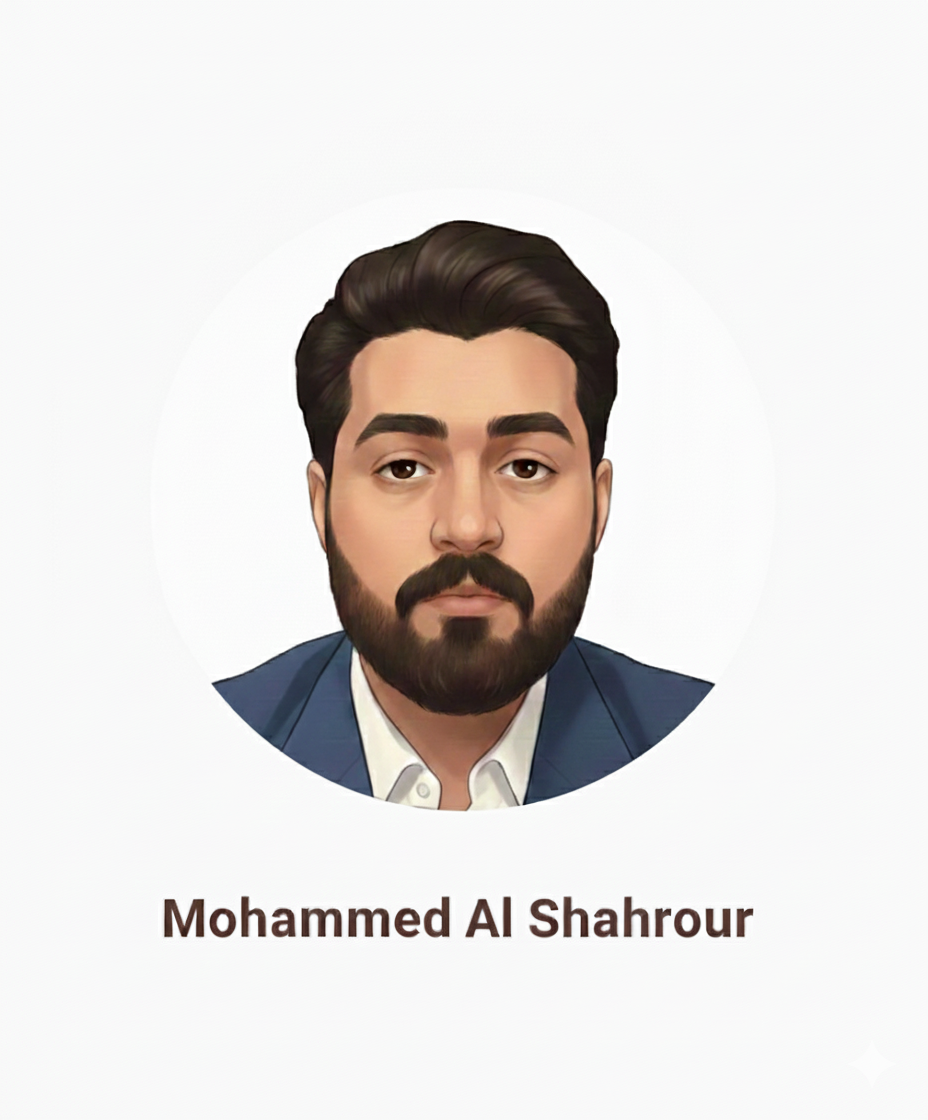
Mohammed Al Shahrour is an Artificial Intelligence Engineer focused on one clear mission: building intelligent systems that solve real human problems. With a strong background in full-stack development, AI pipelines, cloud infrastructure, and robotics, he designs and deploys technology that enhances accessibility, autonomy, and everyday quality of life.
His work lives at the intersection of AI, human–machine interaction, and assistive robotics—where innovation isn’t theoretical, but practical, measurable, and deeply human-centered. Mohammed is driven by the belief that the most powerful technology is the kind that meaningfully improves lives.
 English
  العربية